Be the person who explains it.
Most people have never heard of score voting. Everything here is free to download, with no account and no email: the first two chapters of the book, ballots to print, cards to share and a pitch that fits on an index card.
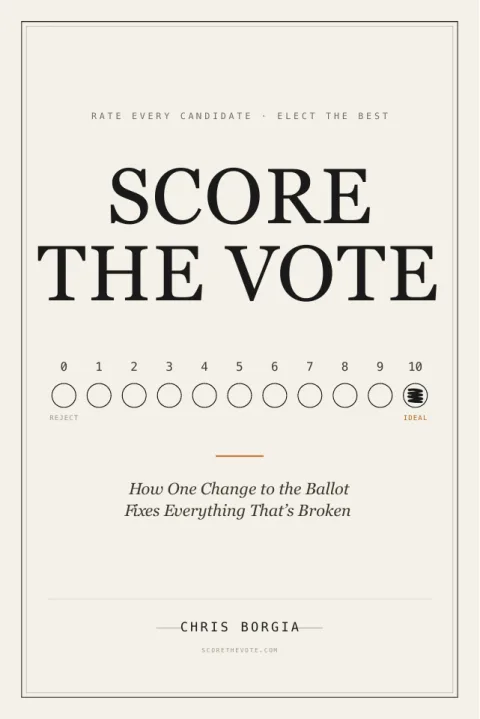
Read the first two chapters
The introduction and “The Plurality Problem,” complete. The spoiler effect in 2000 and in 1912, the workshop where voting experts gave the pick-one ballot zero votes, and the gap between what Americans want and what they vote for.
“You walk into a booth. You pick one name. You leave.”
Chapters 1 and 2 of 19. 16-page PDF, 551 KB.
Want the rest? Get the book.
Print and play
Run a score vote tonight. Everything prints in black and white on US letter paper, and every ballot counts the book’s way: add up the scores; the highest total wins.
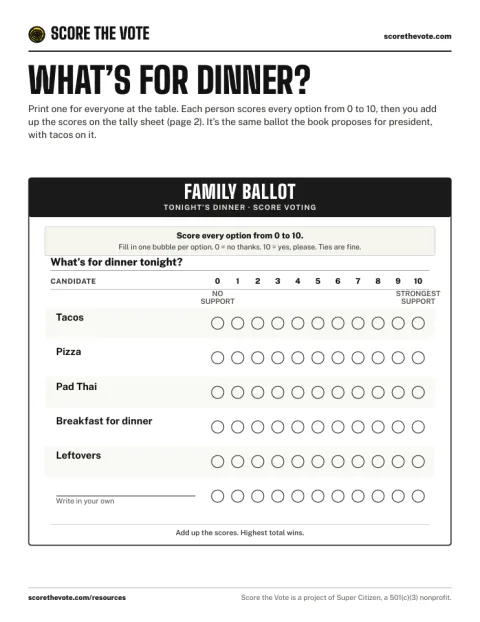
Family dinner ballot
Tacos, pizza, pad thai, breakfast for dinner or leftovers. Everyone scores every option, and a tally sheet adds it up and shows what the old pick-one count would have chosen.
2-page PDF, 40 KB
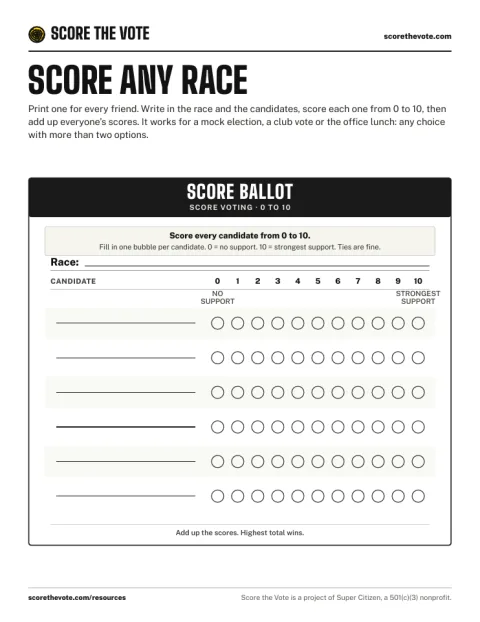
A blank ballot for any race
Write in the race and up to six names. Print one for every friend, your club or the office lunch.
1-page PDF, 28 KB
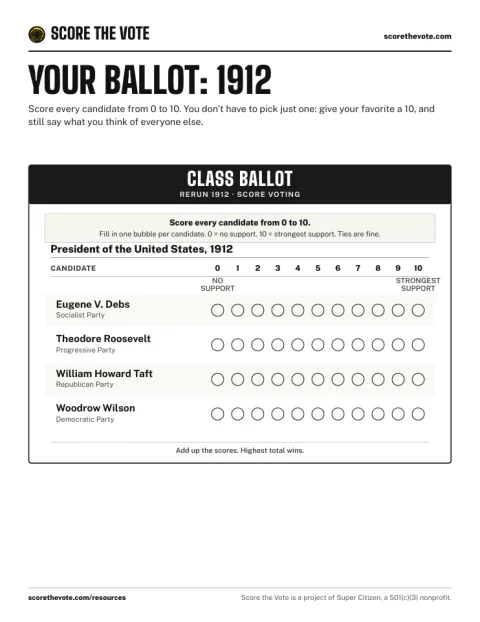
Classroom kit: rerun 1912
A teacher’s guide, a student ballot and a tally sheet. Students score Debs, Roosevelt, Taft and Wilson, count the ballots two ways and talk through five questions about the spoiler effect.
3-page PDF, 50 KB
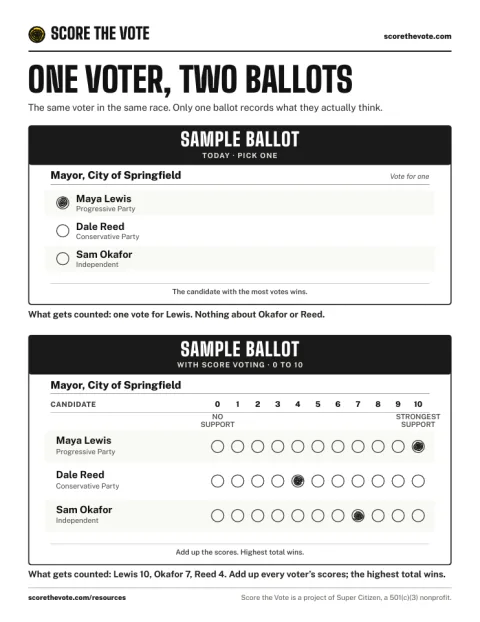
One voter, two ballots
The same race on today’s pick-one ballot and on a score ballot, on a single page. Hand it to anyone who asks what you’re talking about.
1-page PDF, 38 KB
Share a card
Five cards from the book, sized for Instagram and other social feeds. Every statistic on them carries its source.
 (opens the full-size card)
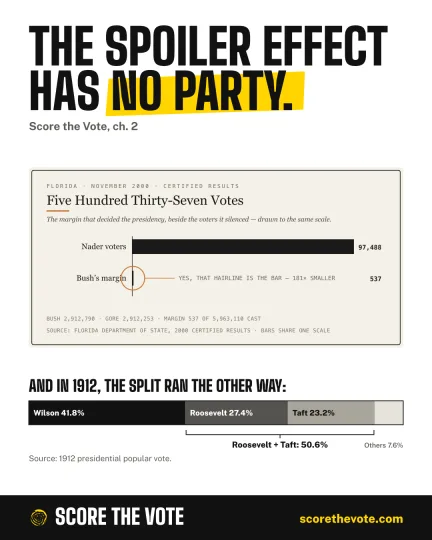
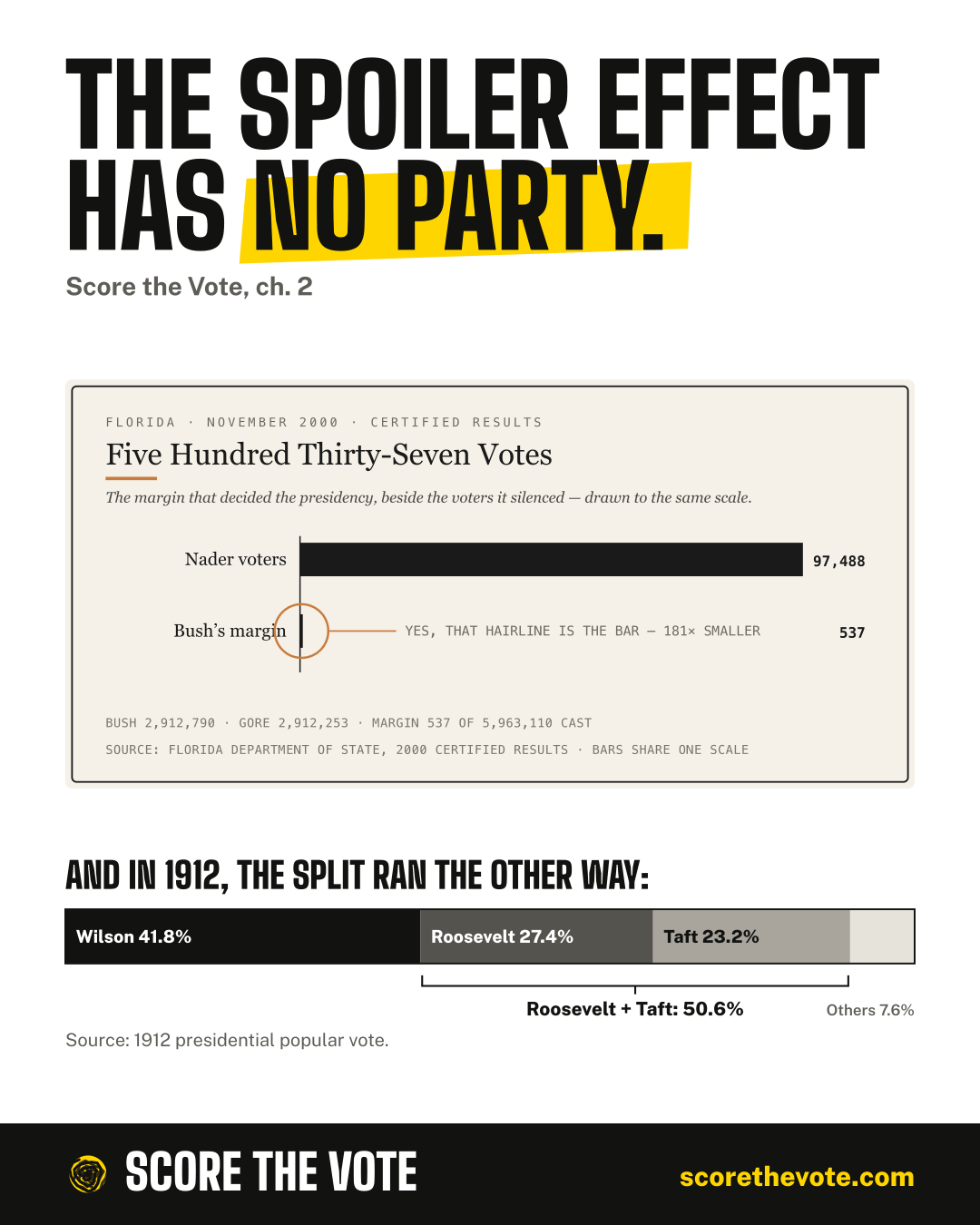
The spoiler effect has no party
Florida 2000 and 1912 on one card: a 537-vote margin beside 97,488 Nader votes, and the split that elected Wilson.
1080 × 1350 PNG, 58 KB
 (opens the full-size card)
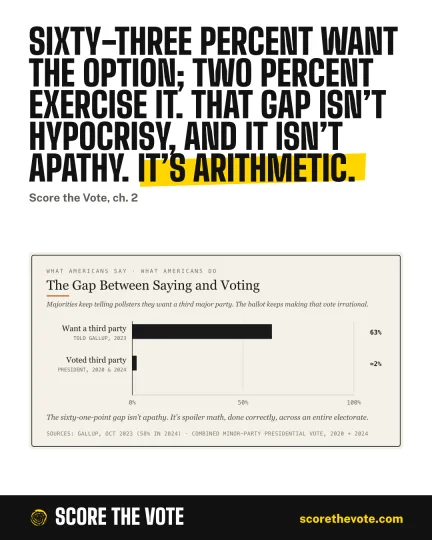
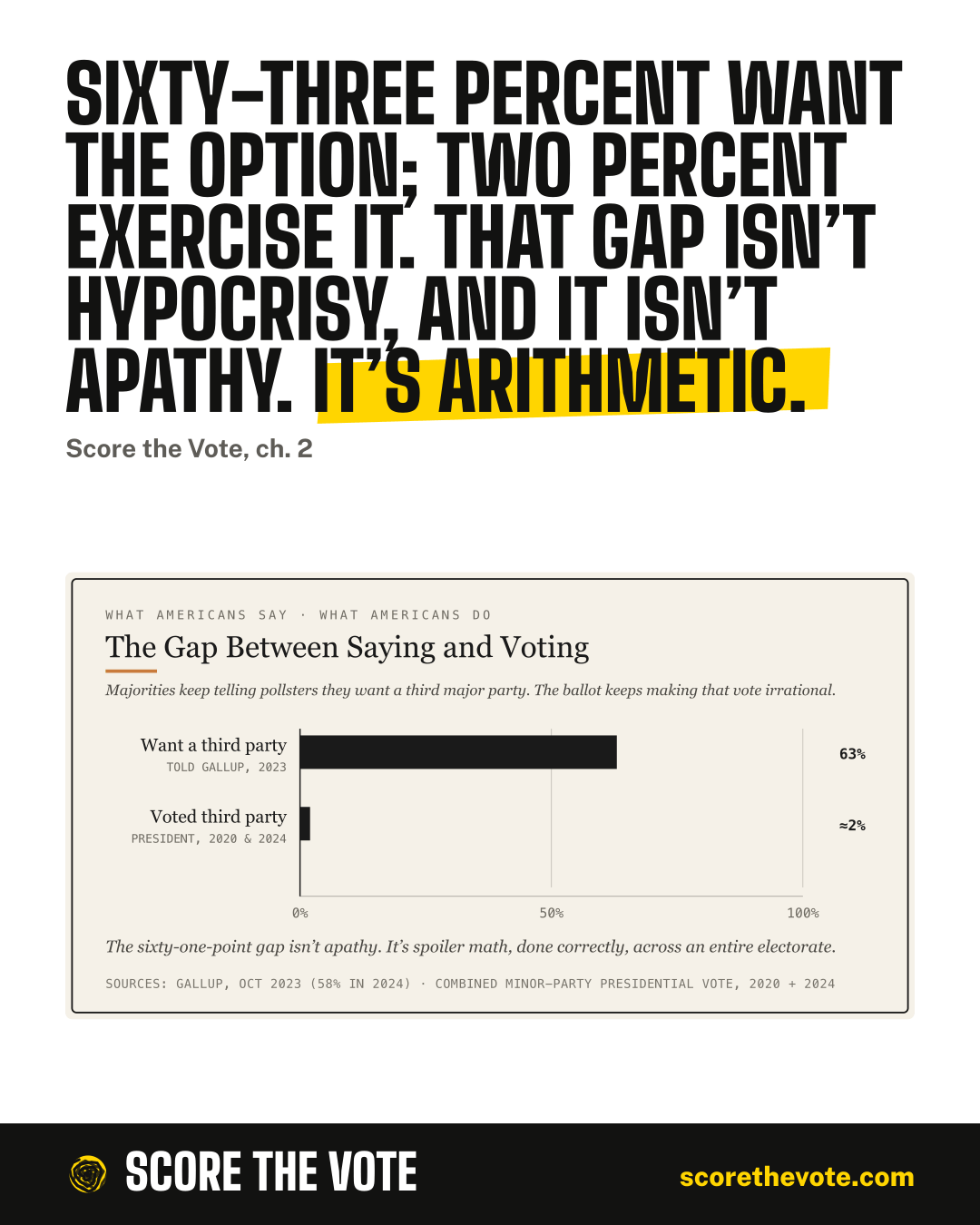
It’s arithmetic
63% of Americans say a third major party is needed. About 2% vote for one.
1080 × 1350 PNG, 71 KB
 (opens the full-size card)
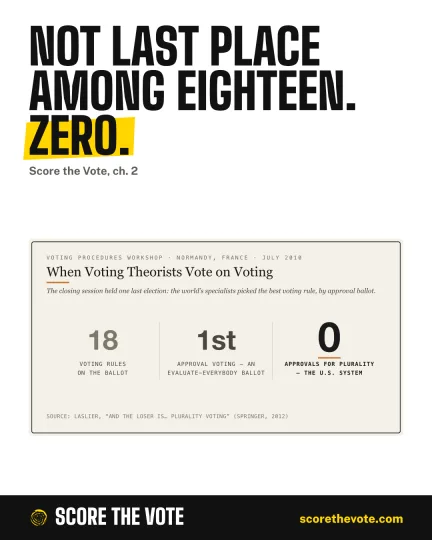
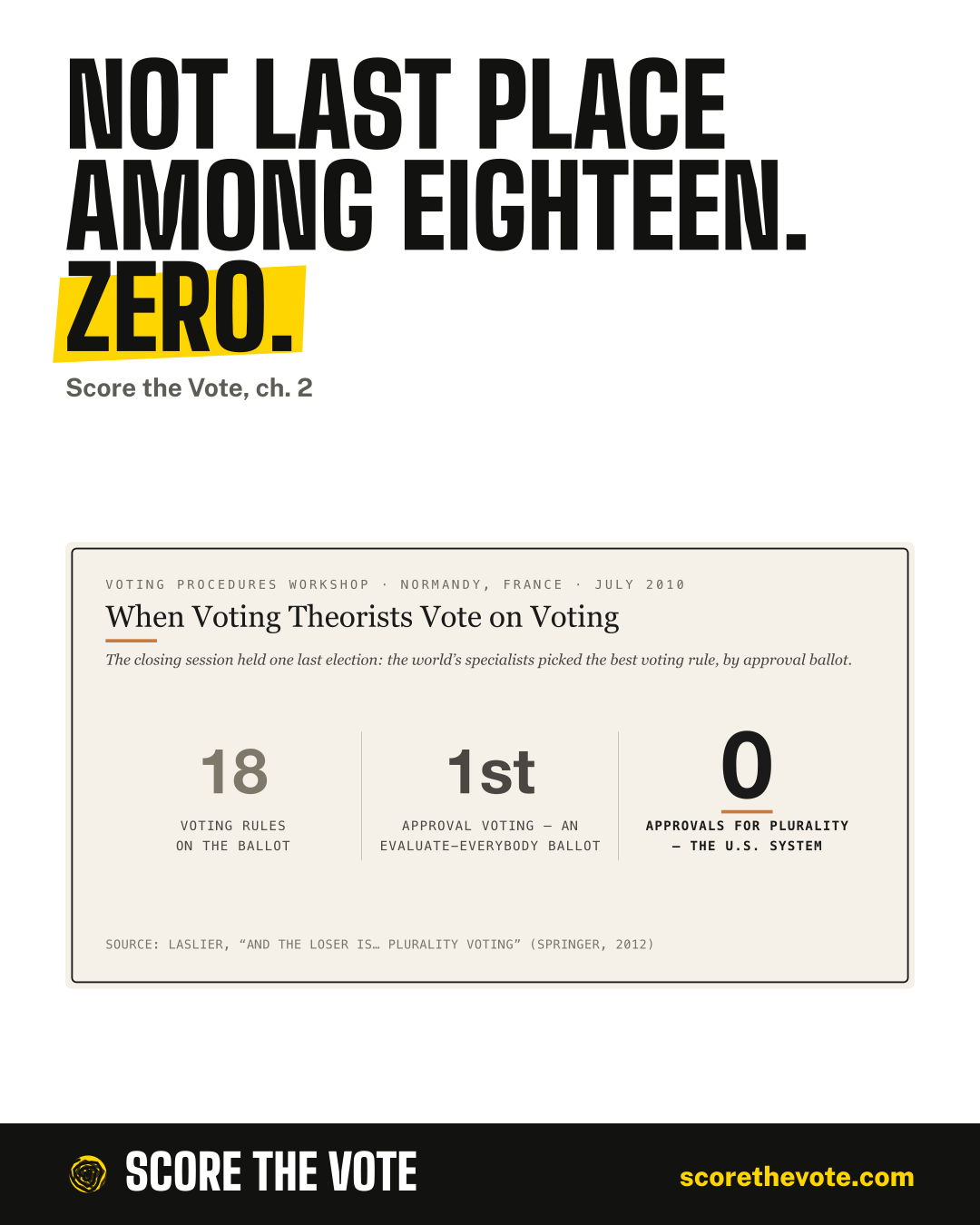
Not last place. Zero.
When voting theorists voted on 18 voting rules in 2010, plurality, the rule the U.S. uses, got 0 approvals.
1080 × 1350 PNG, 51 KB
 (opens the full-size card)
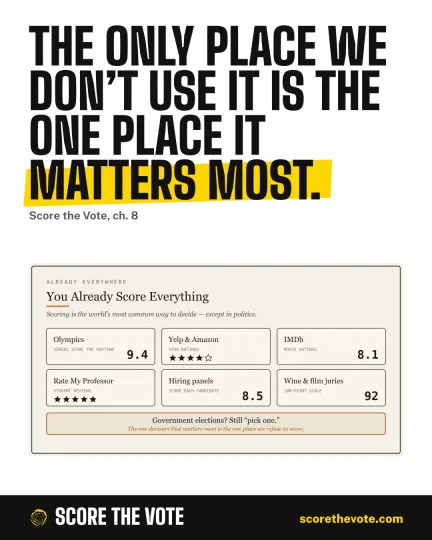
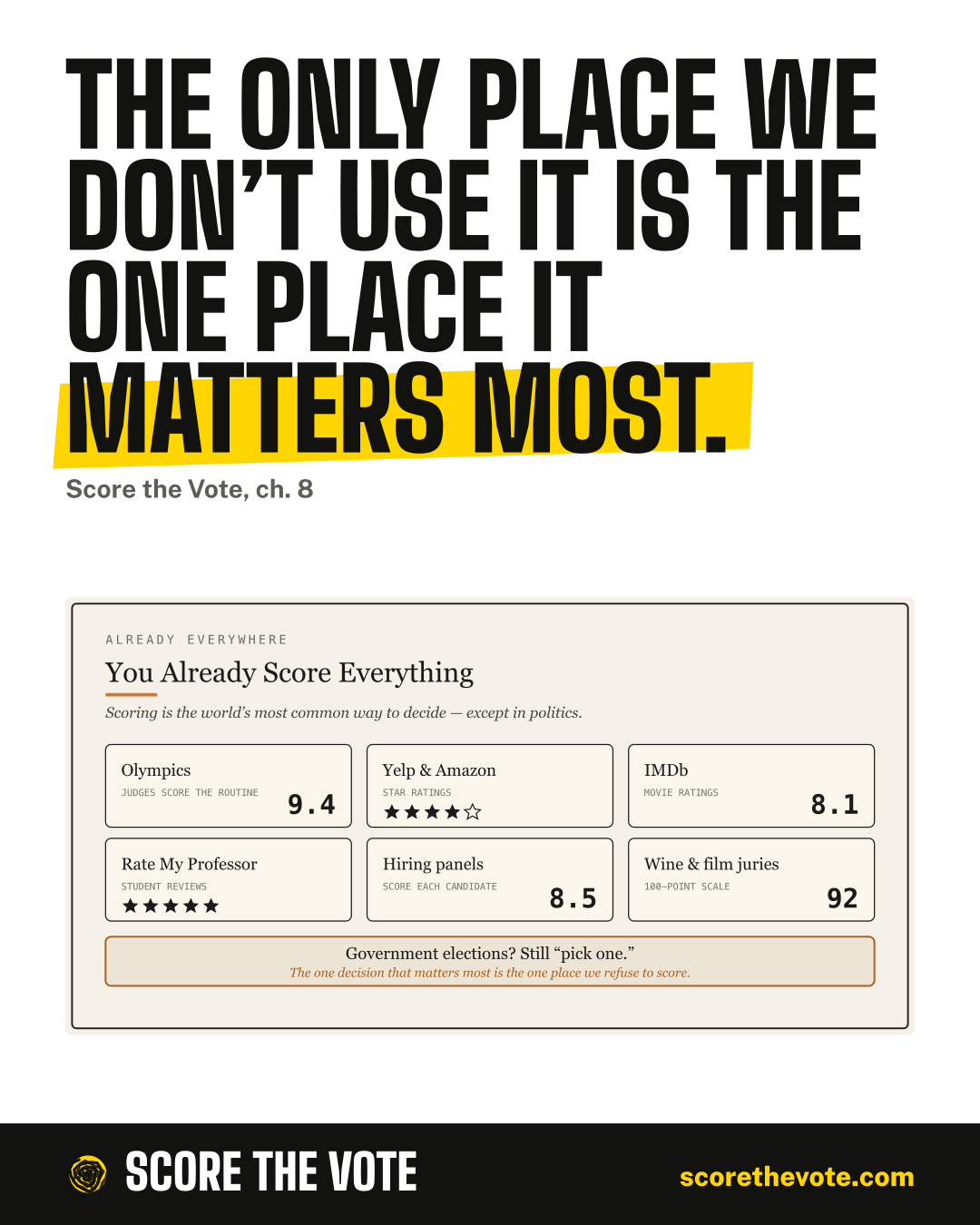
You already score everything
Olympic judges, movie ratings and hiring panels all score. The ballot is where we still pick one.
1080 × 1350 PNG, 60 KB
 (opens the full-size card)
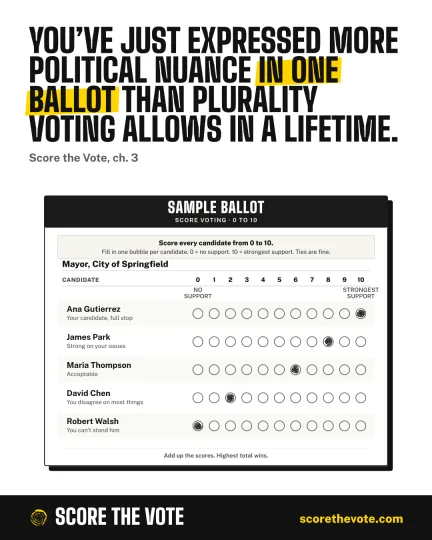
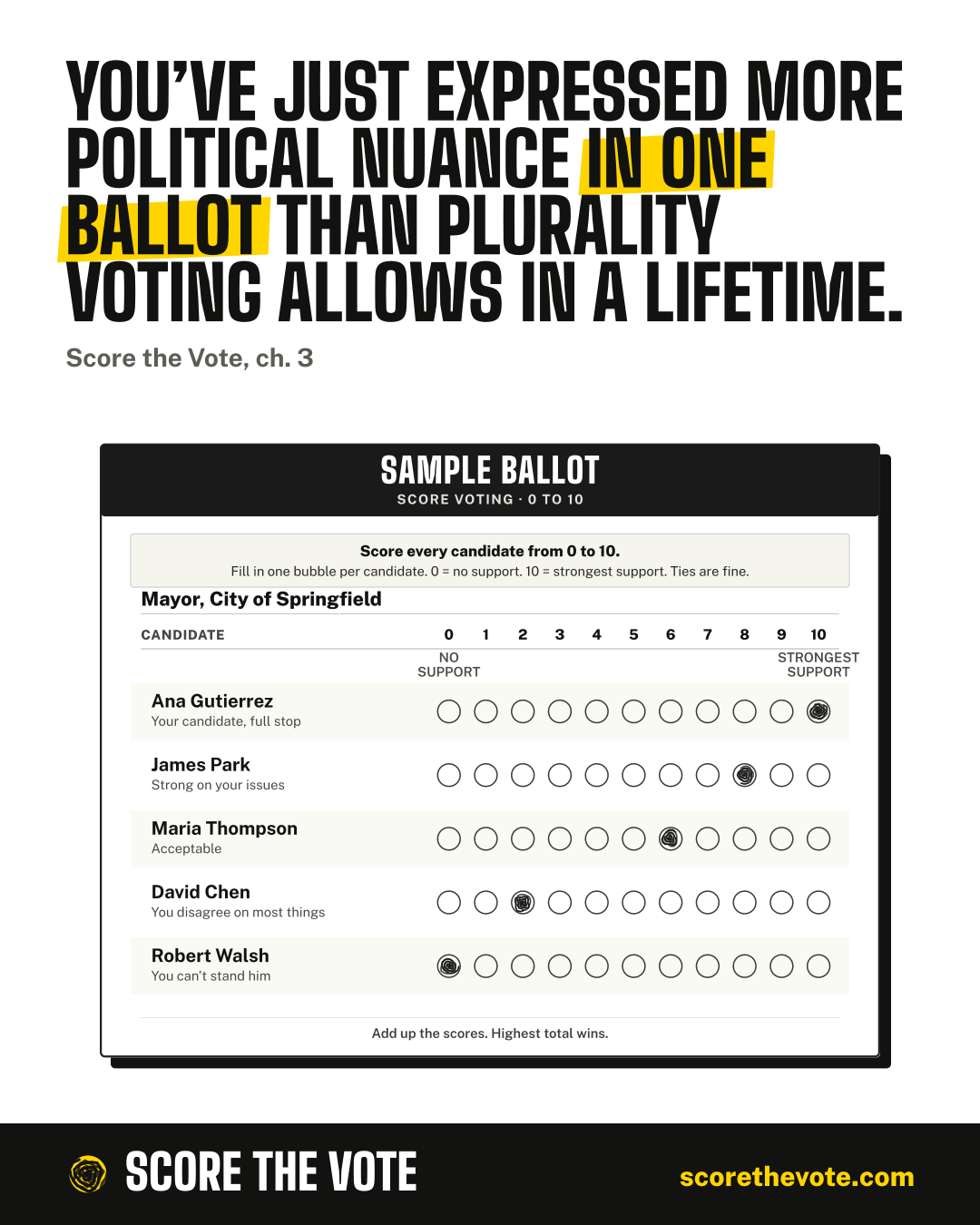
Five opinions, one ballot
A filled-in score ballot for a five-way race, under the book’s line about nuance.
1080 × 1350 PNG, 82 KB
The 30-second pitch
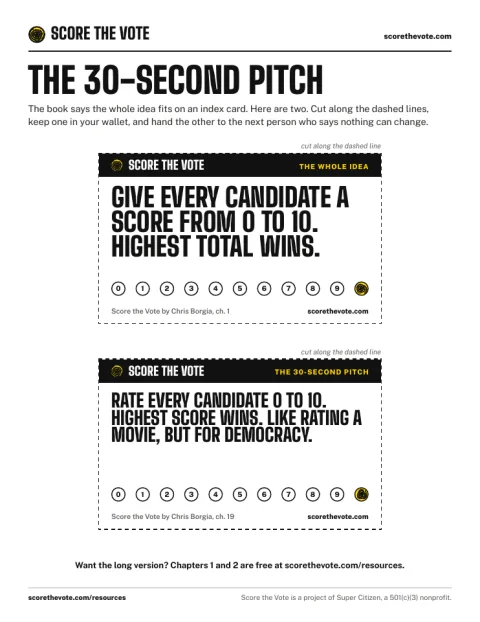
“Rate every candidate 0 to 10. Highest score wins. Like rating a movie, but for democracy.”
The book says the whole idea fits on an index card. Here are two, in the book’s own words, ready to cut out. Keep one in your wallet and give the other away.
1-page PDF, 35 KB
Get updates
Occasional news from the campaign by email. It’s optional: nothing on this page needs it.